Dieudonne Cedor (1925-2010) 36"x24" Mother & Child in Village Scene c1990 Oil On Canvas Unframed Painting #2JN-HA
Dieudonne Cedor (1925-2010) 36"x24" Mother & Child in Village Scene c1990 Oil On Canvas Unframed Painting #2JN-HA
Regular price
$0.00
Regular price
Sale price
$0.00
Unit price
per
Shipping calculated at checkout.
Couldn't load pickup availability
Certificate of Authenticity Included
Description
Description
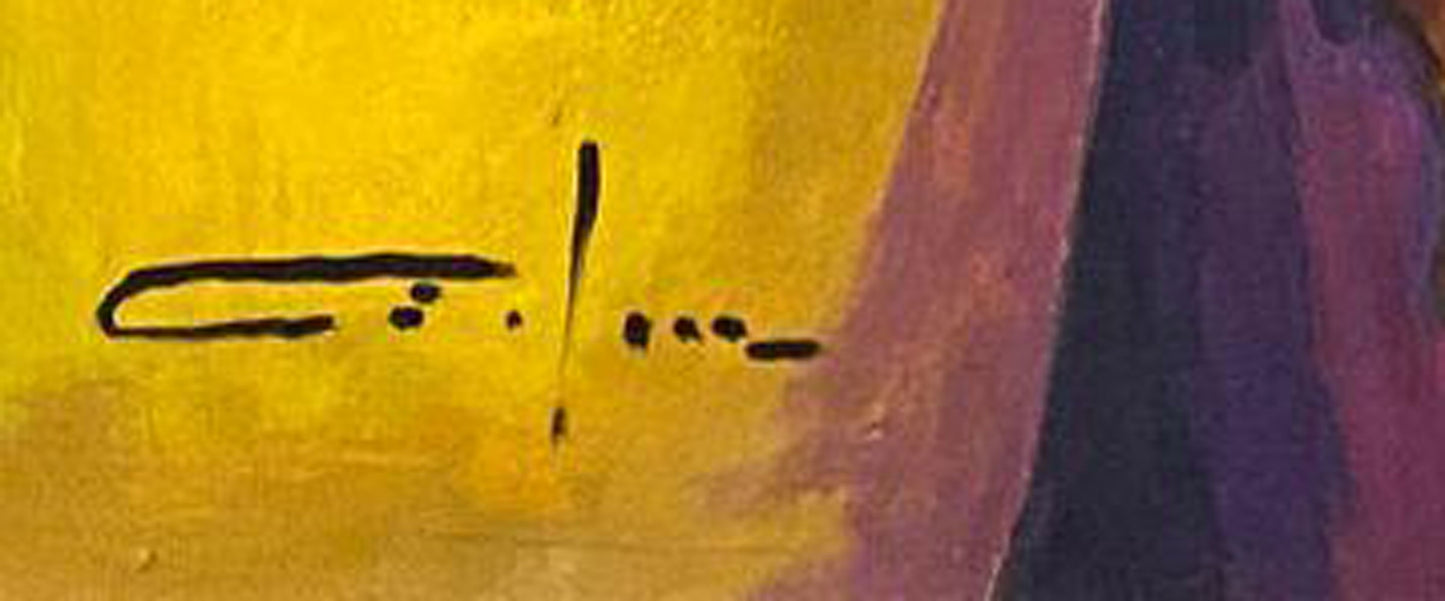
This expressive mother and child painting by Haitian artist Dieudonné Cédor captures a quiet moment of intimacy within a village setting. The composition centers on a seated mother gently holding her child, conveying themes of care, protection, and maternal connection. Cédor renders the figures with soft modeling and a warm, harmonious palette. The mother’s contemplative expression and the child’s relaxed posture emphasize emotional depth, while the surrounding architectural forms and secondary figure introduce a sense of place and narrative context. The interplay of warm earth tones with vibrant blues and yellows creates a balanced and luminous composition. The subject of mother and child has long been a central theme in art history, symbolizing nurture, continuity, and human connection. In Cédor’s interpretation, this universal theme is grounded in Haitian daily life, blending modernist structure with a deeply personal and cultural perspective. Dieudonné Cédor was a Haitian painter and founding member of the Centre d’Art in Port-au-Prince, known for expressive figurative works that combine structure, emotion, and painterly technique. His paintings are widely collected for their ability to bridge Haitian subject matter with broader modernist traditions. This original oil painting is hand-signed by the artist and is accompanied by a Certificate of Authenticity issued by Myriam Nader Haitian Art Gallery.
About this artist
About this artist
Dieudonné Cédor (March 8, 1925–September 27, 2010) was a major Haitian painter born in L’Anse-à-Veau and recognized as one of the leading figures of modern Haitian art. He joined the Centre d’Art in December 1947, where he studied under the supervision of Rigaud Benoit, who introduced him to the foundational principles of pictorial art. Dewitt Peters, founder of the Centre d’Art, quickly recognized Cédor’s talent and leadership, appointing him chief of the studio. In 1949, Cédor was selected as a member of the Centre d’Art’s administrative committee. During a period of institutional conflict between artists and management, he was elected president of the Haitian Artists Association. He later became a founding member of the Foyer des Arts Plastiques (F.D.A.P.) and served as its director from 1952 to 1956, playing a crucial role in shaping Haiti’s postwar artistic infrastructure. In 1956, alongside Luckner Lazard and Roland Dorcély, Cédor co-founded Galerie Brochette, where he remained active until 1962. In 1957, he was appointed director of the Museum of Beaux-Arts of Port-au-Prince, further cementing his influence as both an artist and cultural leader. Cédor’s work spans a wide emotional and thematic range, addressing daily life, social realities, joy, sorrow, and the tensions of the human condition. As noted by Gérald Alexis in Peintres Haïtiens, “Cédor can handle any subject expressing joy or sorrow, the splendors, and anxieties of life.” His name appears in all major reference books on Haitian art, underscoring his lasting legacy